How to Choose the Best Bounce Houses With Slides for Your Event
@johnathanissk123
September 25, 2026 · 15 min read
If you have ever watched a group of kids spot an inflatable from across a park, you already know the draw. They do not walk toward it. They sprint. A good inflatable can carry a birthday party, school fundraiser, church picnic, neighborhood block party, or family reunion with very little convincing. A bad one, though, creates bottlenecks, safety worries, and a lot of stressed-out adults asking whether they should have picked something else.
That is why choosing among bounce houses with slides deserves more thought than many people give it. At first glance, they can all seem pretty similar. Bright colors, mesh sides, a climbing lane, a slide tacked onto one side. But once you start comparing actual units and rental companies, the differences show up fast. Size, age fit, flow, setup space, weather considerations, cleaning standards, and supervision all matter. The best pick is not always the biggest one or the cheapest one. It is the one that fits your crowd, your space, and the pace of your event.
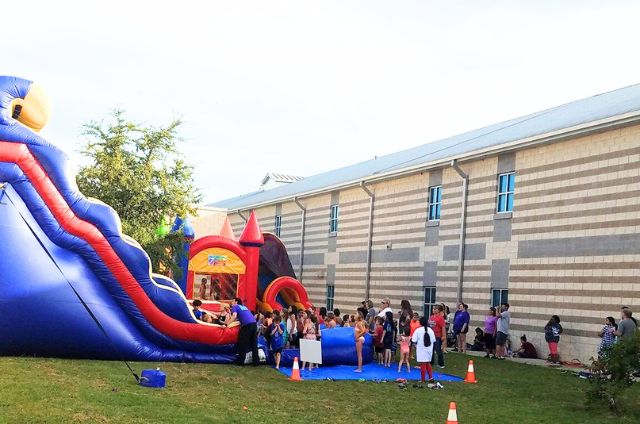
I have seen small backyard parties transformed by a compact combo unit, and I have also seen oversized inflatables swallow half a yard, block access to the patio, and leave parents wondering where everyone is supposed to sit. Picking well is less about chasing the flashiest option and more about matching the inflatable to the event you are actually hosting.
Why slides change the decision
A standard bounce unit gives kids one main activity, jumping. Add a slide, and the whole energy of the inflatable changes. Suddenly there is movement, anticipation, turn-taking, and a little more variety. That can be great for keeping children engaged longer, especially at events that run several hours. It can also reduce the “I’m bored” moment that sometimes hits after repeated bouncing.
At the same time, slides add complexity. They require more internal structure, more climbing, and more supervision. Younger children may need help navigating the climbing wall. Older children may turn the slide into a racecourse if adults are not keeping an eye on things. With bounce houses with slides, you are not just renting a jumping space. You are renting an activity flow.
That flow matters more than people expect. A well-designed combo lets children bounce, climb, slide, and loop back around without crashing into one another. A poorly designed one causes pileups near the entrance or congestion where climbers and sliders intersect. Photos online do not always reveal that, which is one reason it helps to ask rental companies specific questions rather than just browsing for colors and themes.
Start with the guest list, not the inflatable
The smartest place to begin is with the children who will actually use it. Age range changes everything. A unit that is perfect for a five-year-old birthday party may be awkward for toddlers and underwhelming for ten-year-olds.
For preschoolers, lower slide heights, softer entry https://www.blogger.com/blog/post/edit/6854304472429472774/5795439502404953312 points, and a smaller jumping area often work best. Kids in that age group do not need a towering inflatable to have the time of their lives. In fact, oversized combo bounce houses can sometimes make younger children hesitant, especially if older kids are sharing the space.
For elementary-age children, a combo with a bounce zone and slide usually hits the sweet spot. It offers enough action to keep them engaged without becoming so physically demanding that it excludes the less adventurous kids. If your crowd skews older, you may want to look at a bounce house obstacle course or a larger dual-lane slide combo, especially for school events or community gatherings where kids rotate in and out for hours.
Mixed-age groups are the trickiest. This is where adults often try to solve the problem by going bigger, but bigger is not always safer or more enjoyable. In those cases, the real solution is supervision and scheduling. Sometimes the best answer is letting younger kids use the inflatable during one part of the party and opening it up to bigger kids later.
Backyard measurements save headaches
One of the most common mistakes in bounce house rentals is estimating space by eye. A yard can look huge until the inflatable arrives, the blower goes in, the stakes are placed, and you realize the swing set, fence line, tree roots, and patio furniture have eaten up half the usable area.
Rental dimensions listed online usually describe the unit itself, not the total setup footprint. You also need clearance around the inflatable, room for the blower, a clean path for carrying it in, and adequate distance from trees, wires, fences, and structures. If you are planning to rent bounce houses for a backyard event, measure the actual flat space with a tape measure. That five-minute step prevents a lot of day-of stress.
Surface type matters too. Grass is often ideal because it allows proper staking and gives a forgiving landing area around the entrance. Concrete and asphalt can work, but many companies require sandbags or other anchoring methods, and some will charge extra. Indoors can be excellent if ceiling height and access are sufficient, but gym rafters and doorway widths can eliminate options quickly.
A practical rule is to think beyond “Will it fit?” and ask “Will it function comfortably here?” Guests still need space to gather, eat, and move around. You do not want the bouncy house rental to dominate the event site so completely that everything else becomes cramped.
Understanding the main inflatable types
People often use the term jumpy house for everything inflatable, but there are real category differences, and they affect both price and experience.
A classic bounce house is just that, a jumping area enclosed by walls and mesh. It is often the most economical option and can be ideal for very young children or shorter parties.
Combo bounce houses add at least one extra feature, usually a slide, and sometimes a basketball hoop or mini obstacles inside. These are among the most popular choices because they hold attention longer without requiring a massive footprint.
A bounce house water slide unit is designed for warm weather and wet use, either as a true water slide or as a combo that can run wet or dry. These are fantastic in hot climates but introduce extra variables, including hose access, splash zones, and mud management.
A bounce house obstacle course is more about movement and competition than free play. It works especially well at school carnivals, camp events, and parties with older children who like racing through tunnels, pop-ups, climbing features, and slides.
The inflatable bounce house for rent that looks most exciting in photos is not always the best event fit. If your party is two hours in a suburban yard with mostly six-year-olds, a mid-sized combo unit may outperform a giant obstacle course simply because it is easier to use, easier to supervise, and less intimidating.
Safety is not a boring detail
When parents search for bounce house rentals, they often start with theme, price, or whether the inflatable matches the birthday child’s favorite character. Fair enough. But safety standards should move much closer to the top of the list.
A reputable rental company should be able to explain how the unit is cleaned, inspected, anchored, and delivered. They should ask about surface type and available space. They should care about weather. If a company sounds casual about strong wind, that is a red flag. Wind is one of the biggest real-world hazards with inflatables, and experienced operators do not treat it lightly.
The condition of the inflatable tells a story as well. Commercial-grade inflatables can show normal wear without being unsafe, but heavy staining, frayed seams, patched mesh in odd places, or weak-looking stairs are signs to look more closely. Cleanliness matters for obvious reasons, but it is also a proxy for professionalism. A company that takes cleaning seriously often takes the rest of its process seriously too.
Here are a few questions worth asking before you book:
- Is the unit cleaned and sanitized after every rental?
- How is it anchored on my specific surface?
- What is your bad-weather policy, especially for wind or rain?
- Who sets it up and confirms it is safe to use?
- Are there age or occupancy limits for this specific inflatable?
Those five questions reveal a lot. The answers should be direct and confident, not vague.
The best size is usually one step smaller than you think
A surprising number of customers assume that if they expect twenty kids, they need the largest inflatable available. In practice, children cycle in and out. Some are eating cake. Some are opening presents. Some are playing tag. Some are standing in line for face paint. Very few events have every child inside the bouncer house at the same time, and if they do, supervision has probably slipped.
For a standard birthday party with around ten to fifteen kids in the main age range, a medium combo often works beautifully. It keeps the line moving, gives kids variety, and does not overwhelm the yard. Once you move into larger attendance numbers, especially open-house style events where children arrive and leave continuously, then a bigger inflatable or multiple units may make sense.
The bigger consideration is throughput. How many children can use the inflatable comfortably at one time, and how fast do they rotate through it? A combo with a single narrow slide might not handle a high-volume school event gracefully, even if the bounce area itself is large. In that case, a dual-lane design or an obstacle course might be a better fit.
Wet or dry, choose for the season you are actually in
A bounce house water slide sounds irresistible in summer, and often it is. On a hot day, a wet inflatable becomes the center of the party almost instantly. But it is not automatically the right choice.
Wet units need a dependable water source, a hose long enough to reach, and drainage that will not leave you with a muddy lawn by hour two. Kids will track water into the house unless you have a plan. They may need swimsuits, towels, sunscreen, and a place to change. If your event is short or your setup area is already tight, a water unit can create more logistical fuss than you want.
Dry combos are more flexible. They are easier to supervise, simpler to run, and less likely to create cleanup headaches. If the weather is warm but not scorching, a dry unit can still be the better call, especially when the party includes very young children or families who are not dressed for water play.
If you want the option, ask whether the company offers the same unit as wet or dry. Many do. That gives you some flexibility based on forecast and season.
Themes are fun, but layout matters more
It is easy to get drawn in by the appearance of a bouncy house rental. Bright castles, tropical colors, superhero graphics, princess styling, jungle themes. These absolutely matter to kids, especially for birthday photos and first impressions. But after the first five minutes, usability beats decoration every time.
A plain primary-colored combo with a roomy bounce area, wide climbing path, and smooth slide experience will outperform a gorgeous themed inflatable with awkward interior space. If your child cares deeply about a theme, try to balance that desire against the practical features. Some of the best rentals manage both, but if you have to choose, prioritize how the unit plays.
One parent I know booked a heavily themed inflatable for a backyard birthday because it matched the party invitations perfectly. It looked great in photos, but the slide exit was tight, the bounce area was smaller than expected, and kids kept bunching up near the entrance. The next year they went with a simpler combo in brighter generic colors. Less “on theme,” much better party.
Delivery, setup, and timing matter more than most people expect
The inflatable itself is only part of the rental experience. Good setup crews make the day feel easy. Weak logistics make even a nice unit feel stressful.
Ask what delivery window to expect and whether someone needs to be present. Clarify access issues ahead of time, especially if the setup area requires going through a gate, around a pool, or across a long side yard. Some inflatables are much heavier than they look, and not every route works. If the crew has to improvise on arrival, you lose time and increase the chance of frustration.
Power is another practical detail. Most bounce houses need a dedicated outlet within a workable distance of the blower. If you have a large property, check outlet access before booking. Extension cords may be provided, but not always in unlimited lengths.
Timing also affects value. A unit delivered early and picked up late gives kids more playtime and reduces pressure if the party schedule runs behind. Some companies are generous with that window, while others are stricter. Neither approach is wrong, but you should know what you are paying for.
Budgeting without choosing only by price
Everyone has a budget. That is normal. But with bounce house rentals, the cheapest quote can become the most expensive mistake if it leads to poor service, dirty equipment, or day-of cancellation stress.
Price usually reflects a mix of factors: unit size, complexity, rental duration, delivery distance, wet versus dry use, and regional demand. Weekend spring dates often cost more simply because demand is high. Specialty units, especially large combo bounce houses or obstacle courses, carry higher rates because they are bigger, heavier, and more involved to transport.
It helps to compare quotes based on what is actually included. One company may look cheaper until you add delivery, setup, tax, and a generator fee for park use. Another might cost a little more up front but include longer rental time and clearer customer support. The better value is not always the lower base number.
When you rent bounce house with slide options, think in terms of event payoff. If the inflatable becomes the main entertainment for three or four hours, it often replaces several smaller activities. For many families, that makes the cost easier to justify.
A quick way to match the inflatable to the event
If you are standing between several good options and need a practical decision tool, this is the framework I like:
- Choose a compact combo for backyard birthdays with younger kids and limited space.
- Choose a medium combo for most mixed elementary-age birthday parties.
- Choose a larger dual-lane combo or bounce house obstacle course for school, church, or community events with steady traffic.
- Choose a bounce house water slide for hot-weather parties when you have good drainage and a realistic water-play plan.
- Choose simplicity over theme if layout, safety, or supervision would otherwise suffer.
That is not fancy, but it works.
Watch for the small signs of a good rental company
Some of the best companies in this space are not the flashiest online. Their websites may be fine rather than dazzling. What sets them apart is how they handle the details.
They confirm measurements. They explain what surface works best. They give clear instructions about removing shoes, keeping food and drinks out, and separating age groups when needed. They are honest if a particular unit is too large for your yard. They do not pressure you into the most expensive option. That kind of guidance is worth a lot.
I also pay attention to how companies talk about supervision. A responsible operator knows that adults still have a role. Even the best inflatable does not run itself. If you are hosting a busy event with many children, assigning one adult to watch the entry and slide area can make the whole experience smoother. It keeps the roughhousing down and helps younger kids enjoy the inflatable without getting bowled over by bigger ones.
When one inflatable is not enough
There are situations where a single jumpy house, even a large one, is not the best answer. Big school events, public festivals, and multi-family gatherings sometimes work better with two smaller inflatables than one giant centerpiece. That setup can separate age groups, reduce lines, and keep the energy spread across the space.
For example, one standard bouncer house or toddler-friendly combo can serve younger kids while a larger combo or obstacle course handles older children. The result is often safer and less chaotic than forcing everyone into one unit. Yes, the cost can rise, but so does the overall function of the event.
This is also useful when your yard or venue has an awkward shape. Two mid-sized inflatables can fit more naturally than one oversized one, especially if trees, patios, or walkways break up the usable area.
The best choice feels easy once the party starts
That is really the test. Not how the inflatable looks in the product gallery, not how many bright colors it has, not whether it is the single biggest item on the rental site. The best choice is the one that disappears into the event in the best possible way. Kids use it happily. Parents are not hovering in panic. The line moves. The setup makes sense. The party keeps rolling.
When you choose bounce houses with slides well, they do exactly what good event rentals are supposed to do. They create energy without creating unnecessary work. They give kids a reason to laugh, race, bounce, and wear themselves out a little. And they let the adults enjoy the day instead of troubleshooting every twenty minutes.
If you keep your focus on age fit, layout, safety, space, and realistic party logistics, you will make a much better decision than if you shop by theme or price alone. Whether you are booking a simple bouncy house rental for a backyard birthday or comparing larger combo bounce houses for a community event, the goal is the same: pick the inflatable that matches the moment, and the rest of the party gets easier.